

From the yard
Showing, dressage and showjumping: what’s the difference?
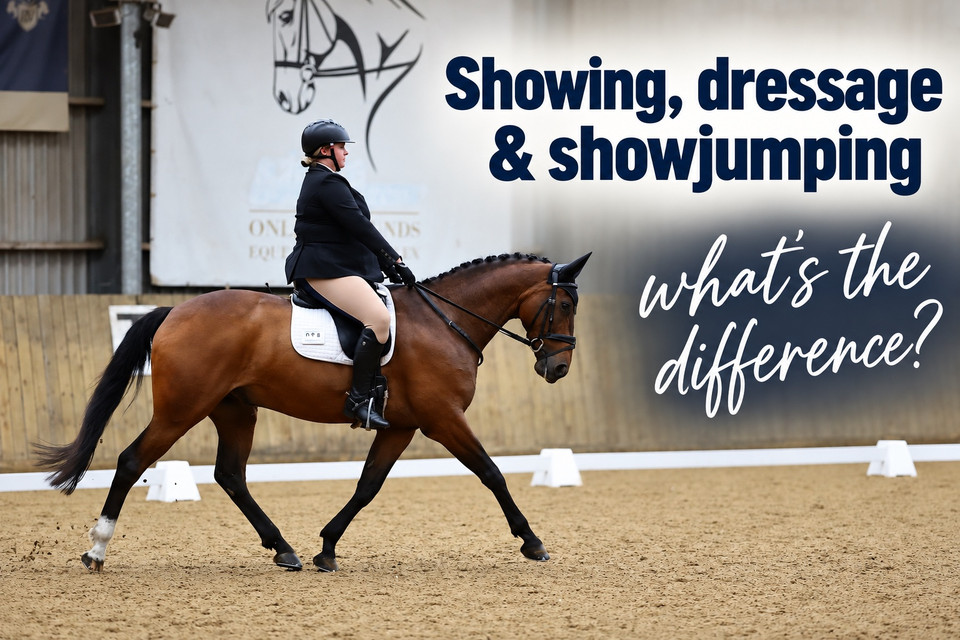
Showing assesses a horse against the requirements of its class. Dressage judges a set test of movements. Showjumping asks horse and rider to complete a course of fences, with penalties and timing determining the result according to the class format.
I’ve done dressage and showjumping with my horse, Rebel. Showing is something I have less experience of. Each discipline gives you something different to watch, but the flatwork connects much more of it than you might think.
Showing: start with the class
In showing, the class tells you what the judge is looking for. Type, conformation, movement and manners can all matter, with requirements varying between classes. Conformation means the horse’s physical build.
Some classes are in-hand, where the horse is led; others are ridden. Working hunter includes jumping as well as assessment of the horse’s way of going and conformation. A clear round alone doesn’t settle the result.
The British Show Horse Association’s class guide gives examples of how different classes are judged. Check the particular show’s schedule rather than assuming every class follows the same format.
I did working hunter as a child, and I think it teaches discipline. It’s something I might have another go at, but for now most of my experience with Rebel is in dressage and showjumping.
One thing to watch: how the horse moves and behaves between the moments when it’s being presented to the judge.
Dressage: making difficult work look easy
A dressage test is a set sequence of movements, marked by a judge or judges and expressed as a percentage. In a standalone dressage competition, the highest percentage wins. British Dressage explains what’s involved.
Personally, I think dressage is one of the hardest equestrian disciplines. It’s certainly the one I find hardest. So much work goes into making it look easy.
When I watch, I notice the transitions and whether the horse is really listening to the rider. The big movements can catch your eye, but those little details tell you a lot too. A transition is simply a change, such as going from trot to canter.
For me, that dressage work is the foundation for everything else. With Rebel, the balance, rhythm and listening that we work on on the flat are exactly what I need when we jump.
One thing to watch: a transition. Does the horse stay balanced and respond smoothly, or does the rhythm change?
Showjumping: watch what happens between the fences
Showjumping involves a set course of knockable fences. Knocking a pole down, refusing or exceeding the time allowed can bring penalties. Some classes have a jump-off; formats vary, so listen to the commentary or check the class information. British Equestrian has a useful introduction.
The bit I find hardest is keeping the rhythm without overthinking. Moving up a height can make me question myself a little, even though I know how much the flatwork matters.
With a course in front of us, keeping Rebel balanced and listening between fences takes more concentration. People naturally watch the jump, but so much of the work happens on the approach and through the turns.
One thing to watch: the canter between two fences. Notice whether the rider maintains a rhythm or needs to adjust it for the next question.
Where eventing fits in
Eventing combines dressage, cross-country and showjumping. Showing is a separate discipline. British Equestrian explains how eventing works.
If you’re watching a mixed programme, start with what each class is asking of the horse and rider. Then look at the details between the obvious moments. That’s where I find a lot of the interesting work.
Updated 15 October 2026. Seasonal archive date retained: 19 May 2026.